Journal
Bamboo vs cotton vs silver-infused: a fabric comparison
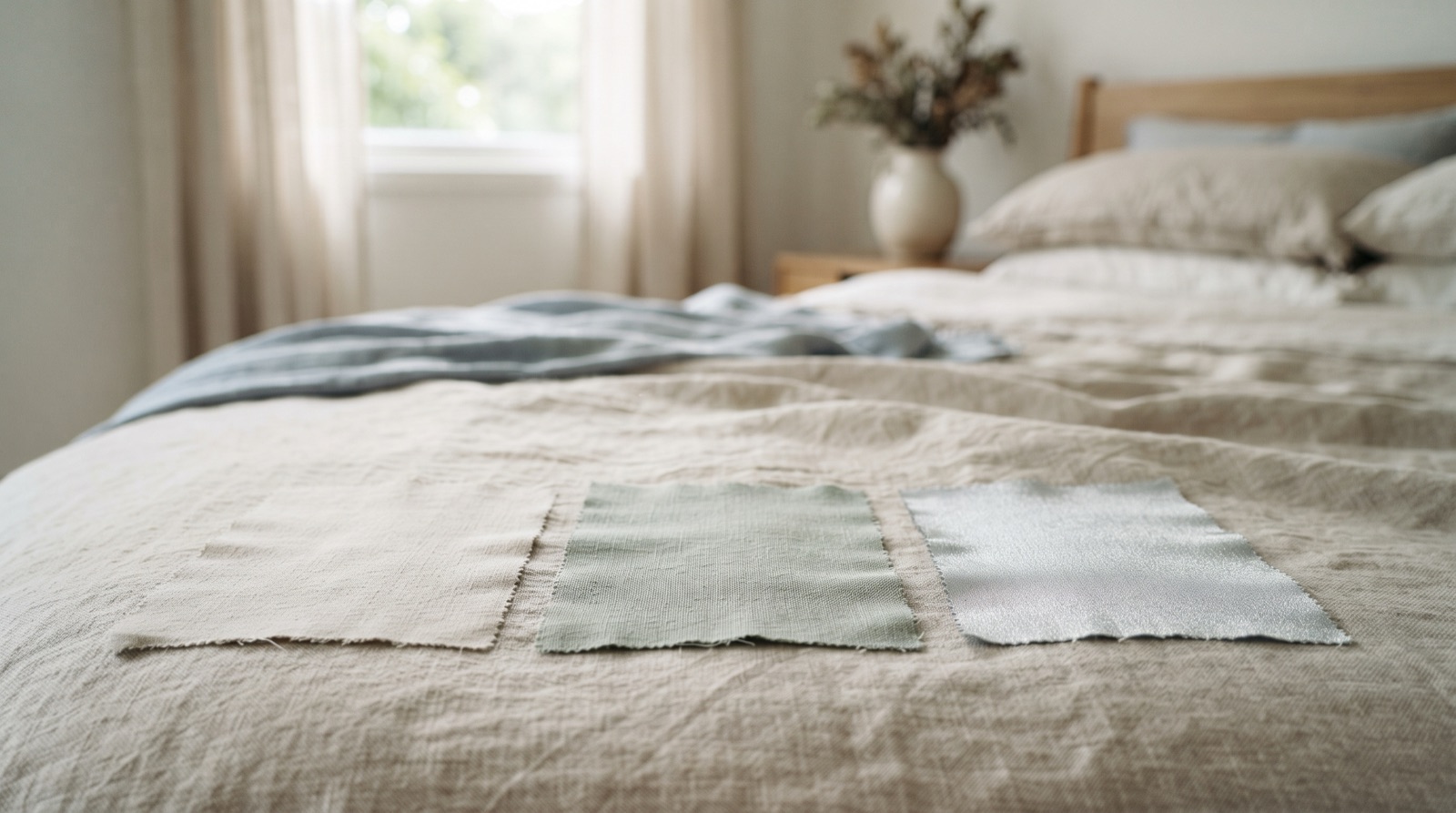
One of these three fabrics is usually mislabelled, one is the honest benchmark, and one is the benchmark wearing a treatment. Sorting them takes five minutes.

By Sam Winters
Review Editor
Last updated
Is bamboo bedding really bamboo?
Almost never in the way it sounds. Textiles made by dissolving bamboo cellulose and extruding new fibre are rayon — the FTC requires that labelling, and its enforcement record runs from four retailers charged in 2009, through penalty rounds against national chains in 2013 and 2015, to its largest such penalty against Kohl's and Walmart in 2022. The fabric itself is fine: silky, cool-draping, absorbent. Buy it as what it is.
Where does cotton stand?
As the benchmark the others are measured against. Long-staple cotton in an honest weave — crisp percale or smooth sateen — delivers breathability, moisture handling and easy laundering with centuries of track record and no labelling asterisks. In measured comparisons, natural fibres' moisture behaviour is exactly why they keep outranking the synthetics marketed against them.
And silver-infused?
It's cotton — the good example is, anyway — plus a finish that does one narrow thing: suppress odour-causing bacteria in the fabric, a mechanism materials science documents. It is not a health technology, US treated-article regulation forbids claiming so, and the year-long clinical trial that tested silver textiles found no patient benefit. Pay cotton prices for the cotton, a modest premium for the freshness if it appeals, and nothing for the halo — our review prices exactly that bargain, hundred-night trial included.