Bedding fabrics, compared honestly
Every sheet pitch is a fabric claim underneath. This hub sorts the families by what's measurable — and flags where the labels get creative.

By Sam Winters
Review Editor · 6 min read
Last updated
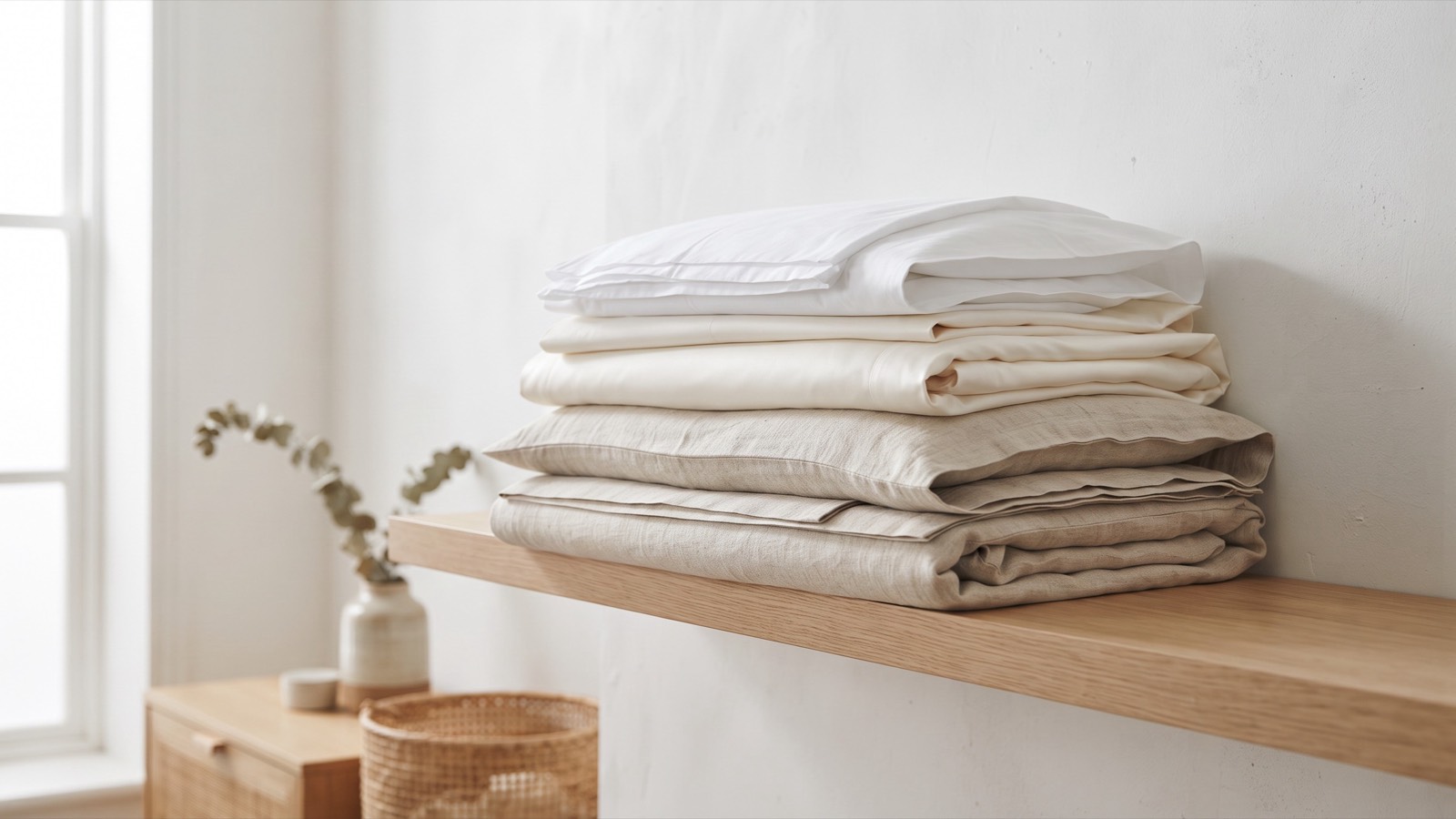
Fibre first, weave second, finish last — that's the order in which fabric decides how bedding sleeps. Cotton splits into crisp percale and smooth sateen; linen leads the natural fibres for airflow and measured moisture handling; 'bamboo' is almost always rayon wearing a costume the FTC has repeatedly fined retailers for; polyester microfibre is cheap and soft but tends to trail natural fibres where sweat is involved; and treated fabrics — silver included — add one narrow, real property to whatever fibre they start from. The groups below take you to the deep dives.
What this page answers
- Which fabric family suits your sleep style?
- What's the honest difference between percale and sateen?
- Is 'bamboo' bedding really bamboo?
- Where does microfibre genuinely belong?
- What do treatments and finishes actually add?
Care & quick answers
Keeping fabrics working, and the numbers that don't mean what labels imply.
Products we've assessed
The fabric theory applied — every review source-linked.
Which fabric family fits which sleeper?
Hot and loves crisp: cotton percale — open weave, cool hand, wrinkles honestly. Hot and hates crisp: cotton sateen — smoother and heavier-draping, still breathable natural fibre; it's the weave our current top pick uses. Hottest nights, highest budget: linen — peer-reviewed moisture-management results back the folklore. Allergy-cautious or budget-led: microfibre works, but know that measured comparisons of common knits generally place polyester behind natural fibres for moisture handling — the 'cooling' label sits most often on the fabric least entitled to it.
'Bamboo' deserves its own sentence: textiles made from processed bamboo cellulose are rayon, the FTC requires them to be labelled that way, and retailers from Kohl's to Walmart have paid penalties for doing otherwise. Rayon drapes cool and feels silky — buy it happily, as rayon.
What do finishes and treatments really add?
One property each, at best. Silver adds fabric-level odour resistance with a documented mechanism — and no lawful or evidenced health-protection claim. Moisture-wicking finishes tune what the fibre already does. Wrinkle-resist coats the hand of the fabric. None of them turn a poor base fibre into a good one, which is why this site assesses the fibre and weave first and treats every finish as a footnote — the same order your skin uses.
Fibre, weave, finish — what actually decides how a sheet sleeps?
The three-layer model this whole hub is organised around, in one short explainer.
Check priceFrequently asked questions
Percale or sateen?
Percale is the crisp, airy, matte weave; sateen is the smooth, lustrous, heavier one. Hot sleepers who like a cool touch lean percale; sateen trades a little airflow for softness while staying breathable cotton.
Is linen worth the price?
For the hottest sleepers, often — woven flax fabrics posted strong moisture-management results in peer-reviewed testing, and linen's airflow reputation is deserved. It's a texture you either love or don't.
Are bamboo sheets a scam?
The fabric is real; the label often isn't. Nearly all 'bamboo' bedding is rayon made from bamboo cellulose — cool-feeling, silky, legitimate — and the FTC has fined major retailers for calling that rayon 'bamboo'.
Is microfibre bad?
It's inexpensive, soft and durable — and in measured knit comparisons polyester tends to handle moisture worst, which matters precisely for the hot sleepers 'cooling microfibre' is marketed to.
Do treated fabrics justify a premium?
Only for the narrow property they add — silver's odour resistance is real at the fabric level, for example. Pay for fibre and weave first; treat any finish as a small bonus, never the reason.
Know your fabric — so which set makes the shortlist?
Once you've picked your family — percale for crisp, sateen for smooth, linen for maximum air, rayon knowingly, microfibre on a budget — the shortlist writes itself. Ours currently has one recommendation and one warning label on it, both fully sourced in the roundup.
Check priceSources
- 1.Moisture management in woven flax and hemp-linen fabrics — PubMed Central, 2024
- 2.Air permeability of common knitted fabrics — PubMed Central, 2025
- 3.How to avoid bamboozling your customers — US Federal Trade Commission, 2026
- 4.FTC penalties over 'bamboo' labelling (Kohl's, Walmart) — US Federal Trade Commission, 2022