
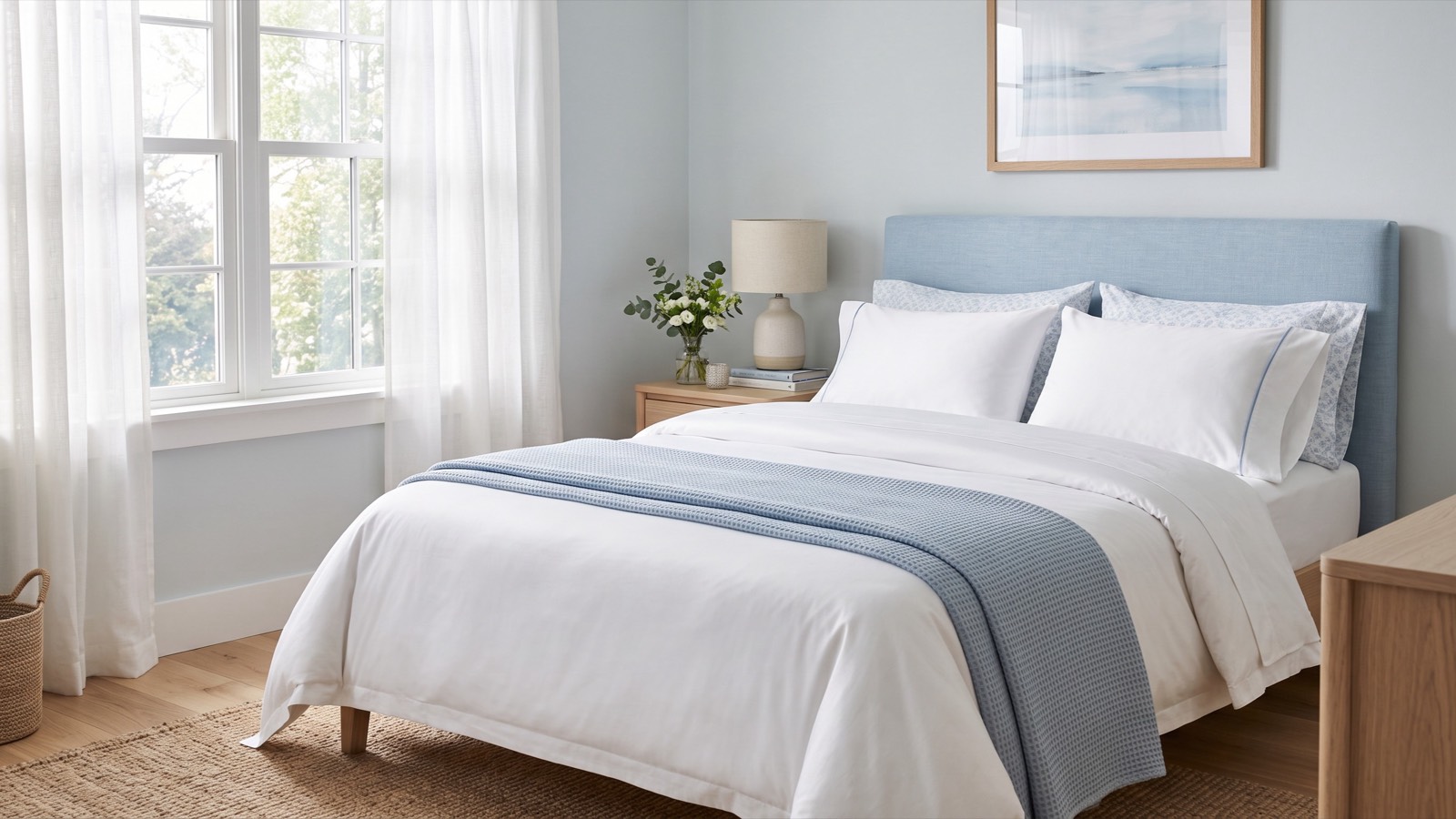
What this page answers
- Which cooling claims are physically real and which are marketing?
- Which fabric should a hot sleeper pick, and in which weave?
- Is 'bamboo' bedding really bamboo?
- When is a warm night a medical question instead of a shopping one?
- Which set currently ranks first, and on what evidence?
At a glance
- Material
- 100% cotton sateen, 300 thread count, silver-infused fibre
- Sizes
- Twin to California King; pockets fit mattresses up to 17″
- Care
- Machine washable per the manufacturer; see our wash guide for what the silver survives
- Returns
- 100 nights from delivery on US orders. The brand pays return shipping, there is no restocking fee, and used or washed sheets are accepted. Returns start by emailing their support team; international orders and final-sale items are excluded, and original shipping fees are not refunded.
Rating breakdown
- Evidence quality
- 7.0
- Materials
- 7.0
- Value
- 6.5
- Care & durability
- 6.5
Fabric-level heat and moisture properties are documented in peer-reviewed textile research; product-level 'degrees cooler' claims almost never are.
Natural-fibre weaves — cotton and linen — hold measured advantages in moisture handling over common polyester knits.
The fabric layer is the cheapest part of the sleep-temperature system to change, and the current pick's returns window makes trying it low-risk.
Cotton percale and sateen both launder well; treated fabrics can lose their treatment over repeated washing, so care instructions matter.
What can a 'cooling' sheet actually do?
Three things, all boring and all real: let air through the fabric, move moisture off your skin, and avoid trapping a layer of warm humid air around you. Published textile research puts numbers on all three — air permeability, moisture management, drying rate — and the differences between fibres are measurable. A 2025 peer-reviewed study measured air permeability across common knit fabrics; a 2024 study documented the strong moisture-management behaviour of woven linen and hemp-linen fabrics.
What no sheet can do is lower your body temperature on its own, and any product claiming a specific 'degrees cooler' figure without published methodology is asking you to take it on faith. None of the figures we could not verify appear on this page.
Which fabrics run coolest?
Linen and crisp cotton percale lead for airflow; smooth cotton sateen — the weave our current pick uses — trades a little of that airiness for a softer drape while remaining a breathable natural fibre. Polyester microfibre is the fabric most often sold as 'cooling' and, in measured comparisons of common knits, is the one that typically handles moisture worst.
Bamboo deserves a special note: almost everything sold as 'bamboo' bedding is actually rayon manufactured from bamboo cellulose, a distinction the US Federal Trade Commission has repeatedly fined major retailers over. Rayon can feel cool — but you're buying rayon, and honest labelling matters.
One more honest limit: 'stays fresh three times longer' and 'wash less often' claims attached to treated fabrics are not supported by evidence we could verify, and dermatology guidance on washing frequency doesn't change because your sheets contain silver.
When is bedding the wrong answer?
If you regularly wake up with soaked sheets and nightclothes even in a cool room, that is night sweats in the clinical sense, and the NHS is unambiguous: see a GP, especially if it comes with fever, cough, weight loss or it simply worries you. Common causes range from menopause and anxiety to medications and low blood sugar — none of which a sheet addresses.
Bedding is for comfort at the margin: the warm sleeper, the stuffy summer bedroom, the duvet that's one season too heavy. For that margin, fabric genuinely helps — and it's the cheapest layer of the system to fix. For everything beyond it, start with the checklist in our sleep-temperature guide, and with your doctor where the symptoms say so.
What we liked
- Fabric-level cooling properties are real, measurable and documented in peer-reviewed research
- Natural fibres hold measured moisture-handling advantages over common polyester knits
- The fabric layer is the cheapest part of the sleep-temperature system to upgrade
- Our current pick pairs a breathable natural-fibre build with a 100-night brand-paid returns window
- Every claim on this page carries a checkable source
What we didn't
- No sheet lowers body temperature — 'degrees cooler' product claims are rarely substantiated
- Most 'bamboo' bedding is actually rayon, an FTC-enforced labelling distinction
- Regular drenching night sweats are a medical symptom no bedding addresses
Why do some fabrics sleep cooler than others?
Airflow, moisture and weave — the measurable physics behind every honest cooling claim in this assessment.
Check priceFrequently asked questions
Do cooling sheets actually work?
As fabric, yes: breathability and moisture handling differ measurably between fibres and weaves, and a better fabric makes a warm sleeper more comfortable. As a temperature-lowering device, no — treat any specific 'degrees cooler' claim without published methodology as marketing.
What's the coolest sheet fabric?
Linen and crisp cotton percale lead for airflow; cotton sateen stays breathable with a softer feel; measured comparisons generally place polyester knits behind natural fibres for moisture handling.
Are bamboo sheets really bamboo?
Usually not in the way it sounds — most are rayon made from bamboo cellulose, and the FTC has fined major retailers for labelling that rayon as bamboo. The fabric can still feel cool; the label is the issue.
Does a higher thread count sleep hotter?
Extremely high counts pack more yarn into the fabric, which can reduce airflow. The 200–400 range covers most well-made cotton; the number alone tells you less than fibre and weave do.
I sweat through my sheets most nights — will better sheets fix it?
No. Regularly waking up soaked is a symptom the NHS says warrants a GP visit — especially with fever, cough or unexplained weight loss. Fabric helps warm sleepers at the margin; it does not treat night sweats.
So what should a hot sleeper actually buy in 2026?
Fix the fabric layer first, because it's cheap, real and reversible. Choose a breathable natural fibre in the weave you like — crisp percale or soft sateen — and ignore every number that doesn't come with a method. Our current first pick is the Miracle Made® set: honest fabric, deep pockets, and 100 nights to find out at the brand's shipping expense. And if your nights are genuinely drenched, see a GP before you see a checkout.
Check priceSources
- 1.Air permeability of common knitted fabrics (measured comparison) — PubMed Central, 2025
- 2.Moisture-management behaviour of woven flax and hemp-linen fabrics — PubMed Central, 2024
- 3.How to avoid bamboozling your customers (rayon vs bamboo labelling) — US Federal Trade Commission, 2026
- 4.FTC penalty actions over 'bamboo' textile marketing (Kohl's, Walmart) — US Federal Trade Commission, 2022
- 5.Night sweats — causes and when to see a GP — NHS, 2023