Sleep temperature: the complete evidence-based guide
Everything on this site hangs off one question: why are you hot at night, and which layer of the problem does money actually fix?

By Sam Winters
Review Editor · 12 min read
Last updated
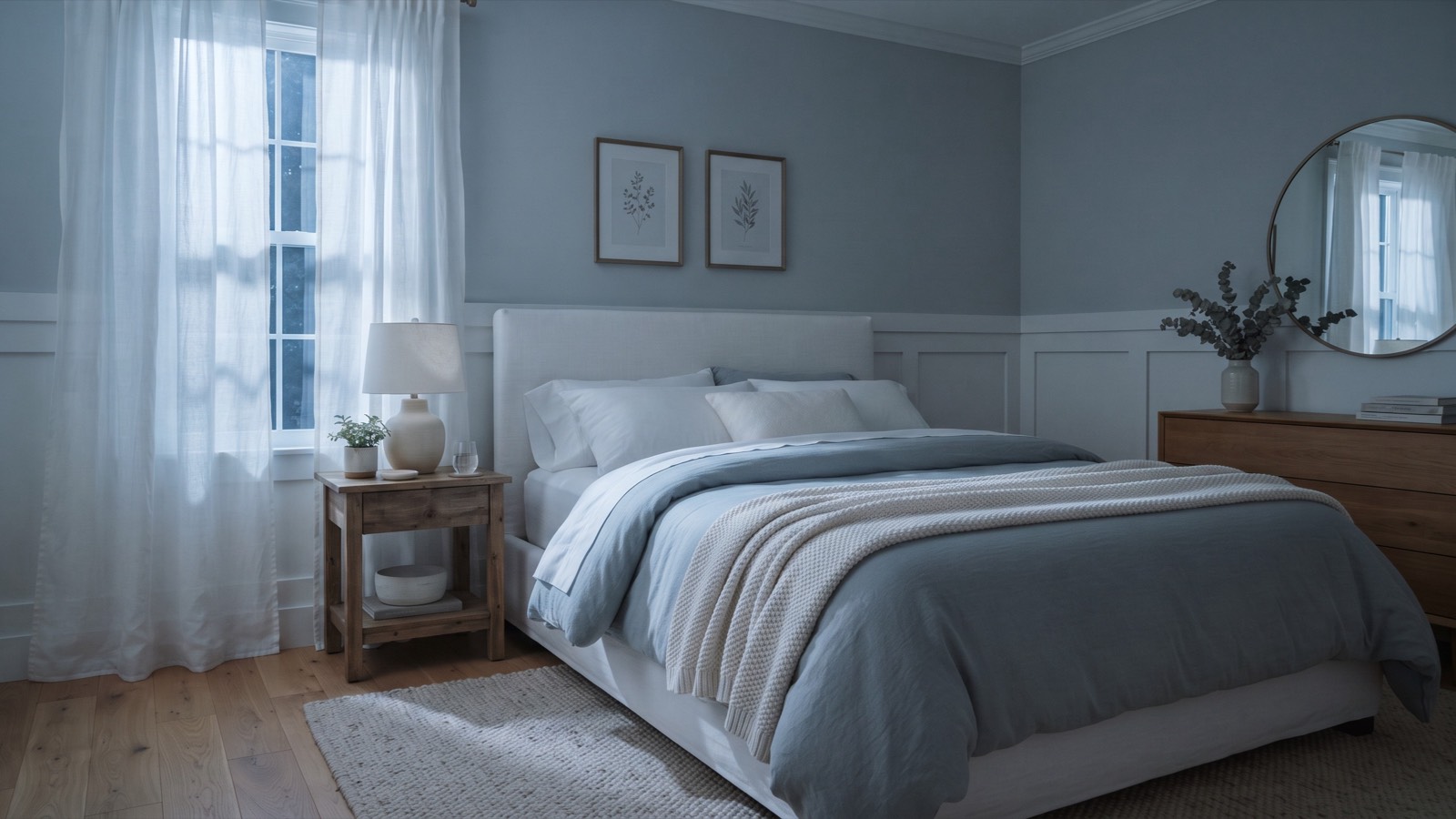
Being too hot in bed has exactly four kinds of cause: the room, the bedding, the body, and — more often than people expect — medicine. This hub walks through all four in order of how cheap they are to fix, links the evidence for each, and is honest about the boundary where shopping stops helping and a GP visit starts. Every product page on this site links back here, because no purchase makes sense until you know which layer your problem lives in.
What this page answers
- Is your hot sleeping a room problem, a bedding problem, or a body problem?
- Which fabric properties are actually measurable?
- When are night sweats a medical matter?
- Does silver bedding do anything real?
- What order should sleep-temperature fixes happen in?
Is it the room?
Start with the free layer. A bedroom that holds the day's heat, still air, and a duvet chosen for winter will overwhelm any sheet ever woven. Cross-ventilate in the evening, move air with a fan, and match the duvet to the season before spending anything on fabric.
The room layer is also where expectations need setting: bedding adjusts comfort at the margin. If the sleeping environment is fundamentally hot and humid, fabric choice softens the experience — it does not overturn it.
Is it the bedding — and which part of it?
Fabric decides how fast heat and moisture leave your skin. The differences are measurable and peer-reviewed: airflow through the weave, moisture wicking along the fibre, drying rate of the cloth. Natural fibres — cotton, linen — generally outperform common polyester knits on the moisture side, which is why so much budget 'cooling' bedding disappoints: it's often the fabric that handles sweat worst, wearing the label that promises it most.
Weave matters as much as fibre. Percale is the crisp, open, air-friendly weave; sateen is the smooth, heavier-draping one. Hot sleepers who love a cool touch usually belong in percale; hot sleepers who hate crispness accept a small airflow trade for sateen's softness. Our fabric hub compares the families in detail.
The pillow is bedding too, and it has its own physics — loft and firmness set your neck's geometry all night. That's covered in its own guide, with the clinical evidence on height and neck pain.
Is it you — and is it night sweats?
There is a clinical line here, and the NHS draws it plainly: it's normal to sweat at night if the room or bedding is hot; it's night sweats when you're soaking through sleepwear and sheets even somewhere cool. The common causes are unglamorous — menopause, anxiety, some antidepressants and painkillers, alcohol, low blood sugar, an overactive-sweating condition called hyperhidrosis — and sometimes no cause is found.
The NHS says to see a GP if night sweats come regularly, wake you, worry you, or arrive with a high temperature, cough, diarrhoea or unexplained weight loss. US health guidance from MedlinePlus draws the same boundary and adds chest pain, palpitations and breathlessness to the see-someone-now list.
We will say this as often as it takes: no product on this site treats night sweats. Bedding serves the warm-but-well sleeper. If your sheets are soaked most mornings, the next purchase is a phone call.
What about the 'technologies' — silver, cooling finishes, magic fabrics?
Treated fabrics can do real, narrow things. Silver in textiles measurably suppresses odour-causing bacteria in the fabric — that mechanism is documented. What treated bedding cannot lawfully claim, and what the clinical evidence does not support, is protecting your health: US regulation confines treated-article claims to protecting the article itself, and a 52-week randomised trial of silver textiles found no clinical benefit for the skin condition studied.
So the honest reading of a silver-infused sheet is: a normal good sheet whose fabric stays fresher between washes. That can be worth paying for. It is not a medical device, and any listing that implies otherwise has left the evidence behind.
How much does thread count matter?
Less than the label wants it to. Thread count is simply yarns per square inch, and once a count is achieved by twisting multiple thin plies and counting each one, the number inflates without the fabric improving. Most well-made cotton lives in the 200–400 range; above it you're often buying weight, not quality — and packed-dense fabric can move less air, which is the opposite of what a hot sleeper wants.
Buy fibre and weave first, count second. The two-minute version lives in our thread-count explainer.
What does the pillow have to do with temperature?
Directly, some — your head is a heat radiator and a pillow that traps warm air around it is noticeable. Indirectly, a lot: the biggest evidence-backed pillow effects are about neck geometry, not heat. A 2021 meta-analysis across 555 participants found pillow design significantly affects neck pain and waking symptoms, and that in side-lying it's the pillow's height and shape — not its fill material — that drive cervical alignment.
Which means the hotel-style pillow question belongs to the loft guide, not the thermometer. If your mornings start stiff, read that before buying anything plump.
How old is too old for a pillow?
Older pillows are genuinely grubby places. A study culturing used pillows aged up to twenty years found every one contained substantial fungal loads — Aspergillus fumigatus in all ten — and bedding studies consistently find house-dust-mite allergen accumulating in pillows over time, with synthetic pillows accumulating it faster than feather ones in paired testing.
For allergy management, the strongest-evidence move isn't replacement at all: allergist practice guidance recommends mite-impermeable encasements and weekly washing. The widely quoted two-year replacement figure comes from the Asthma and Allergy Foundation of America as organisational guidance — sensible, but no trial has ever tested a replacement interval against health outcomes, so treat 'replace every two years' as housekeeping advice rather than science.
What's the sensible order of operations?
One: fix the free stuff — ventilation, fan, seasonal duvet. Two: fix the fabric layer with a breathable natural fibre in the weave you like; it's the cheapest purchase with a real mechanism. Three: fix the pillow if your complaint is neck-shaped, using height and firmness rather than brand stories. Four: if what's driving you here is soaking, regular night sweats — stop shopping and see a GP.
The product pages on this site exist for step two and three, and they're written under the same rule as this hub: every claim carries a source, and the claims that couldn't be verified aren't here.
Everything in this silo
- The best cooling bedding of 2026, ranked on the evidence
- Miracle Made® sheets review: what the evidence supports — and what it doesn't
- FluffCo pillow review: the hotel promise vs the paper trail
- Cooling sheets in 2026: what actually works, assessed on the evidence
- Cooling sheets vs a hotel pillow: which upgrade first?
Why are you hot at night?
The four layers of the problem — room, bedding, body, medicine — and which ones money can fix.
Check priceFrequently asked questions
What's the difference between sleeping hot and night sweats?
Sleeping hot is discomfort explained by the room or the bedding. Night sweats, per the NHS, is soaking through nightclothes and sheets even when the environment is cool — and that regular pattern warrants a GP conversation, especially with fever, cough or weight loss.
Do cooling sheets really make a difference?
At the fabric level, yes — airflow and moisture handling differ measurably between fibres and weaves, and natural fibres generally handle moisture better than common polyester knits. No sheet lowers your body temperature, and specific 'degrees cooler' claims rarely come with a method.
Is silver bedding worth it?
As odour control for the fabric, it has a documented mechanism. As health protection, no — regulation forbids the claim for treated articles and a year-long randomised trial found no clinical benefit. Pay for the fabric, not the halo.
How often should pillows be replaced?
AAFA suggests every two years as general guidance, but no study has tested an interval against outcomes. The stronger-evidence moves are mite-proof encasements and weekly hot-enough washing per allergist practice guidance — and replacing any pillow that's lost its loft.
Should I buy a firmer pillow for neck pain?
Buy the right height before the right firmness: the clinical literature points at loft and shape as the drivers of alignment in side-lying, and at pillow choice affecting neck pain and waking symptoms. Our loft guide turns that into a measuring method.
So where should your next hour — or dollar — go?
Work the layers in order: free fixes, then fabric, then pillow geometry — and a GP instead of a checkout the moment the symptom pattern says so. If you land on the fabric step, our roundup compares the sets we've assessed with every source in the open.
Check priceSources
- 1.Night sweats — causes and when to see a GP — NHS, 2023
- 2.Sweating — causes and when to contact a provider — MedlinePlus, US National Library of Medicine, 2025
- 3.Air permeability of common knitted fabrics — PubMed Central, 2025
- 4.Moisture management in woven flax and hemp-linen fabrics — PubMed Central, 2024
- 5.PR Notice 2000-1: treated articles exemption — US Environmental Protection Agency, 2000
- 6.52-week randomised trial of silver-coated textiles — PubMed, 2024
- 7.Pillow designs, neck pain and spinal alignment: systematic review and meta-analysis — PubMed, 2021
- 8.Fungal contamination of bedding (Woodcock et al., Allergy) — PubMed, 2006
- 9.House dust mite allergen in pillows: synthetic vs feather (paired 12-month study) — PubMed, 1999
- 10.Environmental assessment and exposure control of dust mites: practice parameter — AAAAI / ACAAI / JCAAI, 2013
- 11.Dust mite allergy — prevention and bedding guidance — Asthma and Allergy Foundation of America, 2026