How to wash silver-infused sheets without ruining them
The silver is the fragile part. Here's the routine that keeps the fabric — and its one real benefit — intact for as long as the construction allows.

By Sam Winters
Review Editor · 6 min read
Last updated
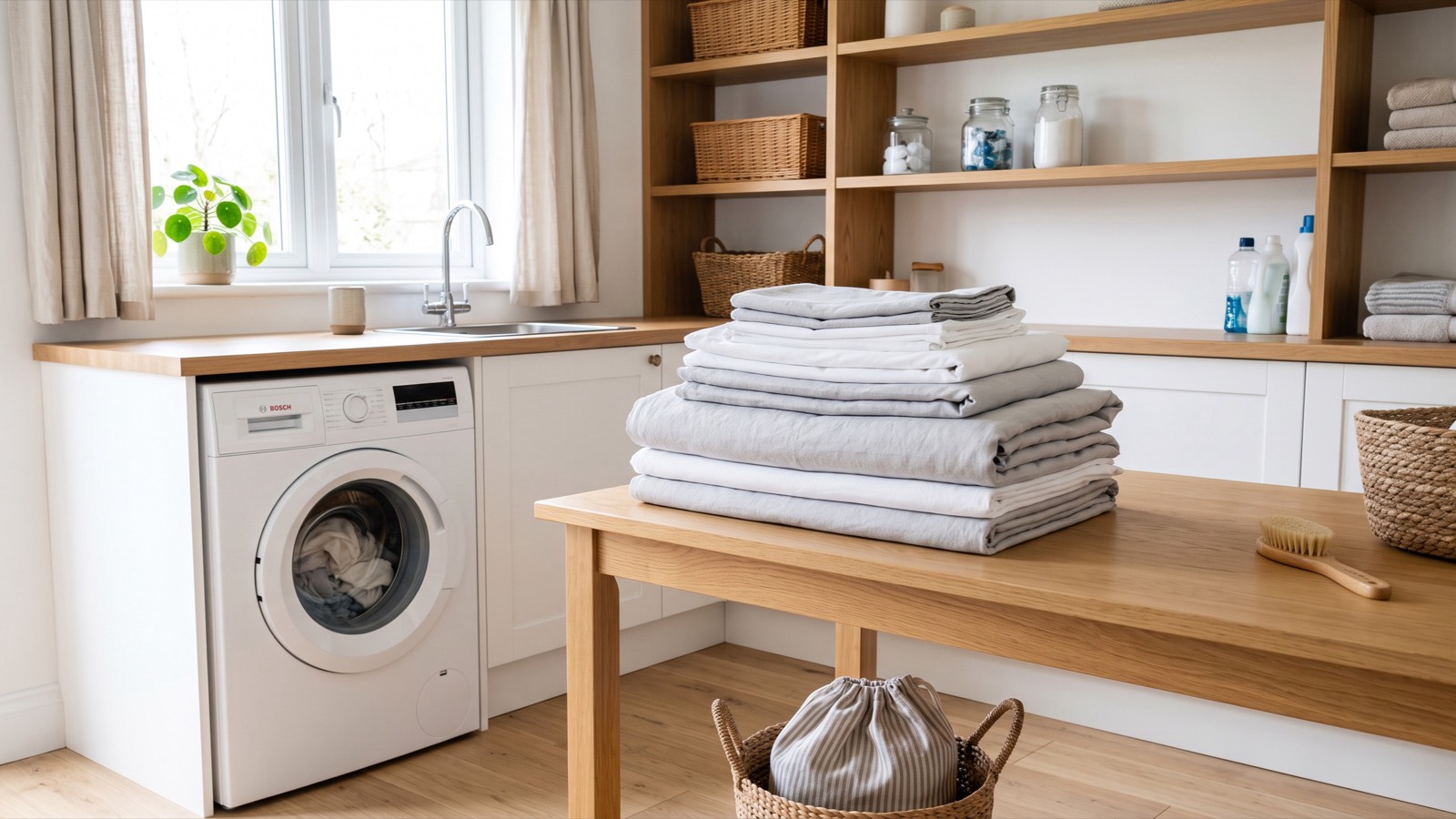
Silver-treated bedding earns its keep between washes — fewer odour-producing bacteria surviving in the fabric. The catch is that laundering is exactly where treatments die: controlled studies have measured silver-coated fabrics losing roughly half to three-quarters of their silver over twenty wash cycles, while constructions that bind silver inside the fibre retain it far better. You can't change how your sheets were made, but you can stop accelerating the loss. Six steps.
What this page answers
- What wash settings keep silver-treated fabric working?
- Which laundry products quietly destroy the treatment?
- How fast does the silver actually deplete?
- Does treated bedding change how often you should wash?
- When does the care label overrule the internet?
Step by step
- 1
Wash cool and gentle
Use a cool-to-warm cycle and a gentle programme. Heat and agitation are the two mechanical forces laundering studies associate with treatment loss — and cool washing is kinder to cotton generally.
Tip: The care label wins over any guide, this one included.
- 2
Use a plain, mild detergent
A standard mild detergent is all the fabric needs. Skip anything marketed as deep-clean or whitening for these sheets specifically.
- 3
Never bleach
Chlorine chemistry attacks the silver as well as the stains. If a stain needs targeted treatment, spot-treat the area rather than dosing the whole load.
- 4
Skip fabric softener
Softener works by coating fibres — which is precisely the wrong thing to do to a fabric whose function depends on its surface. It also reduces cotton's moisture-wicking, which hot sleepers bought these sheets for.
- 5
Dry low, or line-dry
Tumble-dry low or hang them. High dryer heat is the other repeated stressor in wash-durability testing, and cotton sateen keeps its finish better with gentler drying.
- 6
Wash on a normal schedule
Weekly, or close to it — the same as any sheets. Marketing that suggests treated bedding needs washing three times less often has no verified evidence behind it, and skin-hygiene guidance doesn't change because your fabric contains silver.
What actually happens to the silver in the wash?
It leaves — the only question is how fast. In controlled laundering research, fabrics with silver coated onto the surface lost 48–72% of their silver across twenty wash cycles, while a construction with silver synthesised inside the cotton fibre lost dramatically less. The lesson isn't panic; it's that every harsh cycle spends a limited budget.
This is also why we treat 'lasts forever' style durability claims with suspicion on any treated textile, and why the routine above leans gentle on every axis: temperature, chemistry, agitation, heat.
Does washing undo the odour benefit?
Gradually, with the silver itself. The mechanism — silver ions interfering with bacteria in the fabric — is real and documented, so while meaningful silver remains, the between-wash freshness effect has a basis. As it depletes, you're left with what you really bought: a decent cotton sateen sheet set, which still washes and wears like one.
That's the honest frame for the whole category, and it's why our review scores the product on the fabric first and the finish second.
When should you ignore all of this?
When the care label disagrees. Manufacturers specify care for the exact construction they sell, and the label on your set outranks any general guide — this one included. If the label and the marketing seem to disagree with each other, follow the label and lower your expectations of the marketing.
What does laundering do to treated fabrics?
The measured wash-durability findings behind every step in this routine.
Check priceFrequently asked questions
Can I use hot water on silver-infused sheets?
Follow the care label; cooler cycles are the safer default. Heat is one of the stressors associated with faster treatment loss in laundering studies — and most routine washing doesn't need it.
Why no fabric softener?
Softener coats fibre surfaces — the exact surfaces the silver treatment and cotton's moisture-wicking depend on. It's the cheapest thing to skip for the biggest preservation effect.
Do silver sheets need washing less often?
No verified evidence supports washing treated bedding less often, and hygiene guidance doesn't change with the fabric. Weekly-ish remains the sensible schedule.
How long does the silver last?
It depends on construction. Surface-coated fabrics measurably shed silver over tens of washes; fibre-embedded constructions retain far more. Gentle washing slows the clock on either.
Will bleach ruin them permanently?
It's the fastest way to spend the silver and stress the cotton at once. Spot-treat stains instead, and keep chlorine away from the load.
Ready to make the silver last?
Cool, gentle, no bleach, no softener, low heat, normal schedule — that's the whole discipline. Do that and the treated fabric keeps its one real benefit for as long as its construction allows, and the cotton underneath stays excellent for years past it.
Check priceSources
- 1.Silver loss from coated fabrics across 20 laundering cycles — PubMed, 2016
- 2.In-situ silver synthesis inside cotton fibre — wash retention — PubMed, 2020
- 3.Antibacterial mechanism of silver ions in textiles — PubMed Central, 2025
- 4.Miracle Sheet Set — care guidance — Miracle Brand, 2026