Journal
Cooling sheets buyer's guide: fabrics ranked by how they actually sleep
Rank the fabrics by measured airflow and moisture handling and the 'cooling' aisle rearranges itself — with the cheapest label on the worst performer.

By Sam Winters
Review Editor
Last updated
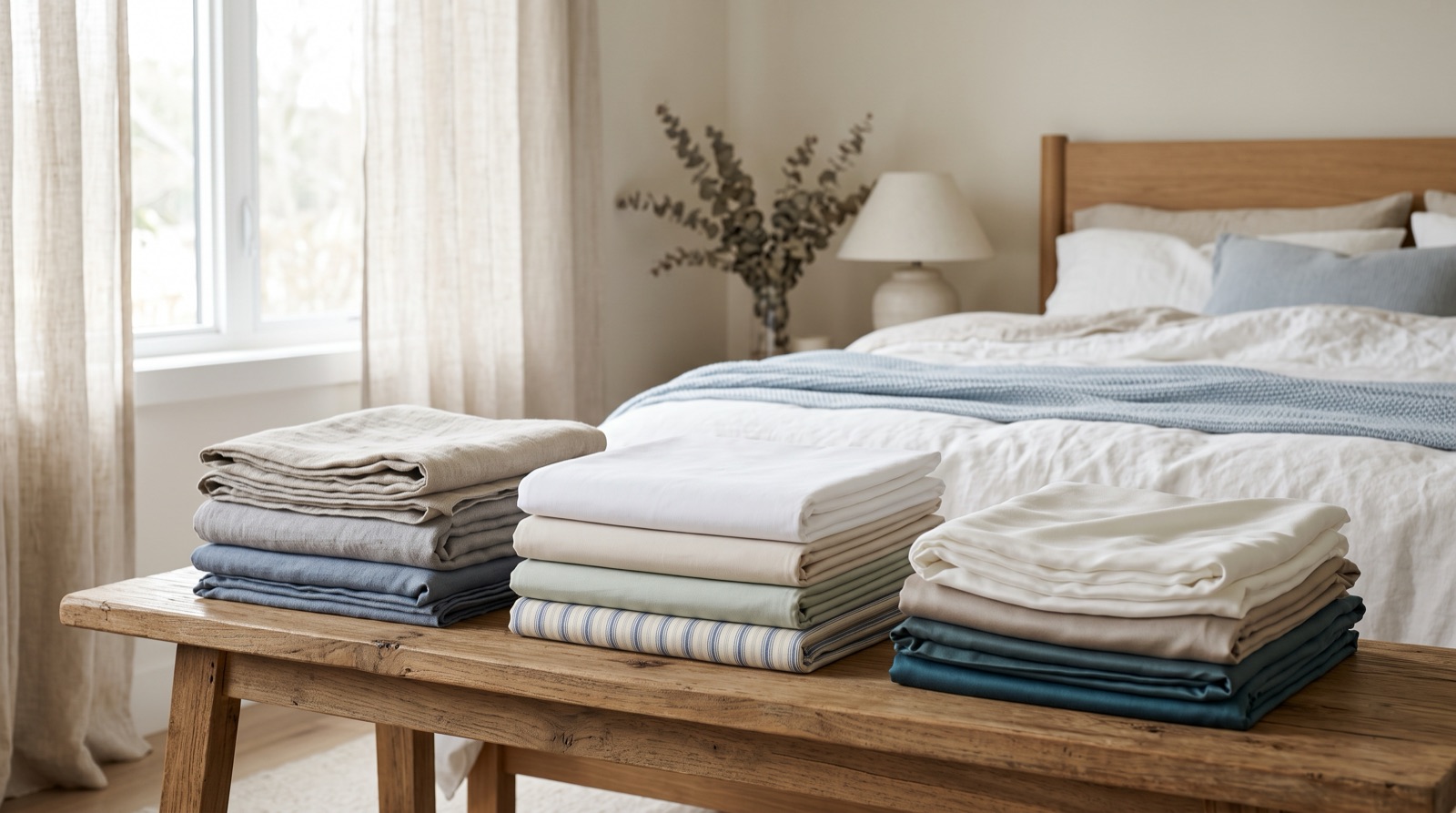
Which fabrics measurably sleep coolest?
Linen leads: peer-reviewed testing of woven flax fabrics documents excellent moisture management, and its open handle moves air well — the folklore is earned. Cotton percale comes next for the crisp, airy feel; cotton sateen keeps the breathable fibre but trades some airflow for smoothness, which many sleepers prefer against the skin.
Then the complications. 'Bamboo' is almost always rayon made from bamboo cellulose — a cool-feeling, silky, legitimate fabric whose labelling the FTC has repeatedly fined retailers over. And polyester microfibre, the fabric most often wearing the word 'cooling', is the one measured knit comparisons generally place last for moisture handling.
How should a hot sleeper actually choose?
Decide crisp versus smooth first — that's percale versus sateen, and it's taste. Then buy the best natural fibre the budget allows, in a weight suited to your climate. Then, and only then, look at finishes: treatments like silver add fabric-freshness, not temperature, and they deplete with washing.
Ignore any listing that promises a specific number of degrees cooler without publishing a method — we found none that did. Our launch review walks the current market through exactly this filter, and the roundup applies it to the sets we've fully assessed.