Journal
What a $100 sheet set actually buys you versus a $30 one
Triple the budget doesn't triple the sheet. It buys five specific upgrades — and past a point, it mostly buys marketing.

By Sam Winters
Review Editor
Last updated
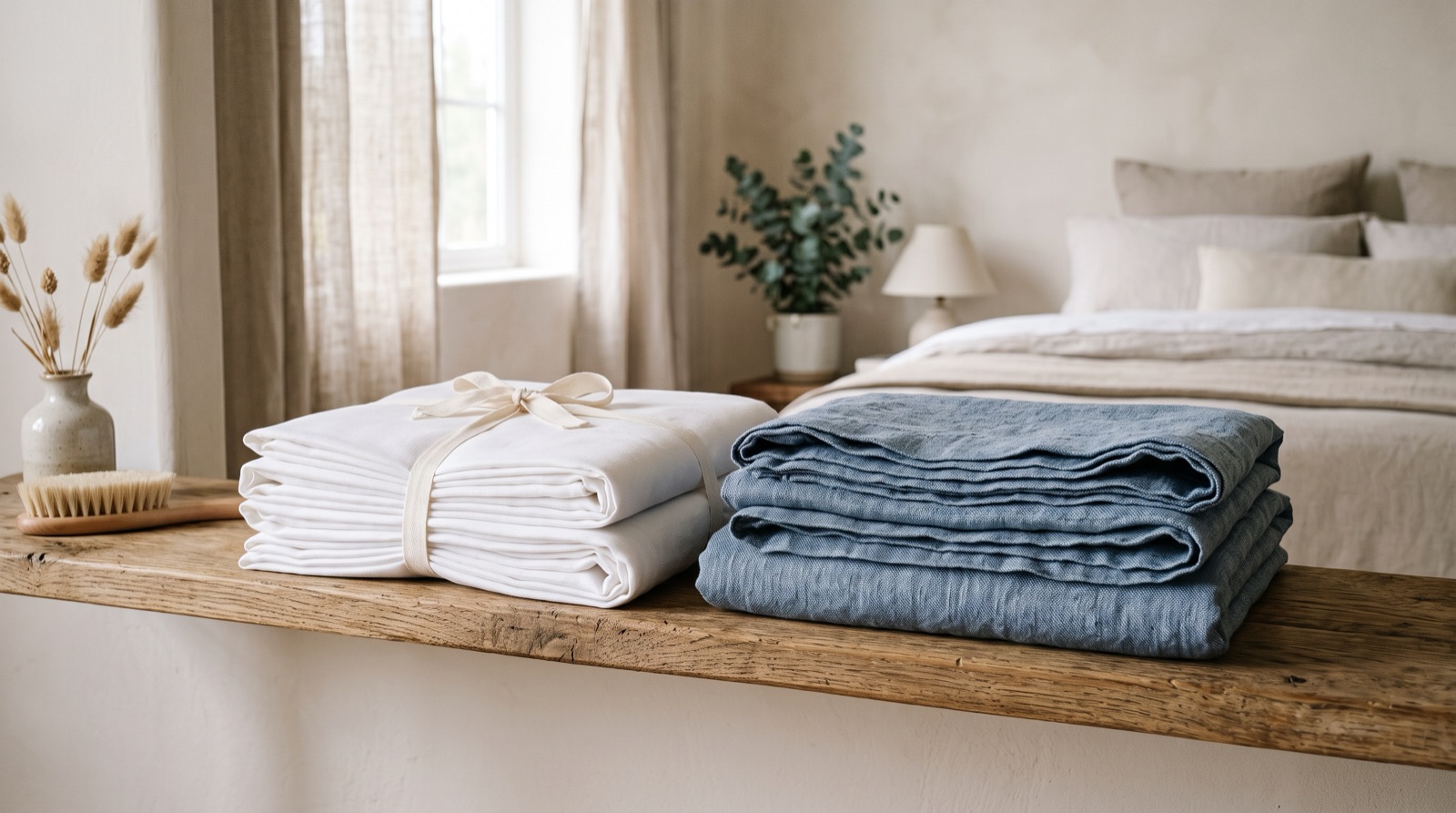
What does the extra money actually purchase?
Five things, roughly in order. Longer-staple cotton, which spins finer, stronger yarn that pills less and softens with washing instead of wearing out. Weave discipline — an even, honest percale or sateen instead of a loose approximation. Real finishing: singeing and mercerising that improve lustre and durability. Deeper pockets and better elastic, the unglamorous fit engineering. And a returns policy with actual room in it — the hundred-night, brand-pays-shipping kind rather than the restocking-fee kind.
A thirty-dollar set compromises on most of those at once: shorter fibre, looser weave, minimal finishing, shallow pockets and a tight returns window. It can still be a fair buy for a guest bed or a first flat — it's just a different product wearing the same photograph.
Where do the diminishing returns start?
Around the point where the spec sheet stops changing and the adjectives take over. Once you have long-staple cotton, an honest weave in the two-to-four-hundred range, proper finishing and a generous trial window, additional money tends to buy thread-count inflation and brand story — the exact traps our thread-count explainer and roundup exist to price. Our current first pick sits in the premium-but-specified zone; the review lays out precisely which of these five upgrades its price is buying.