Journal
Why you wake up sweating — what actually causes night sweats in bed
There's a clinical line between sleeping hot and night sweats — and which side of it you're on decides whether the fix is fabric or a GP appointment.

By Sam Winters
Review Editor
Last updated
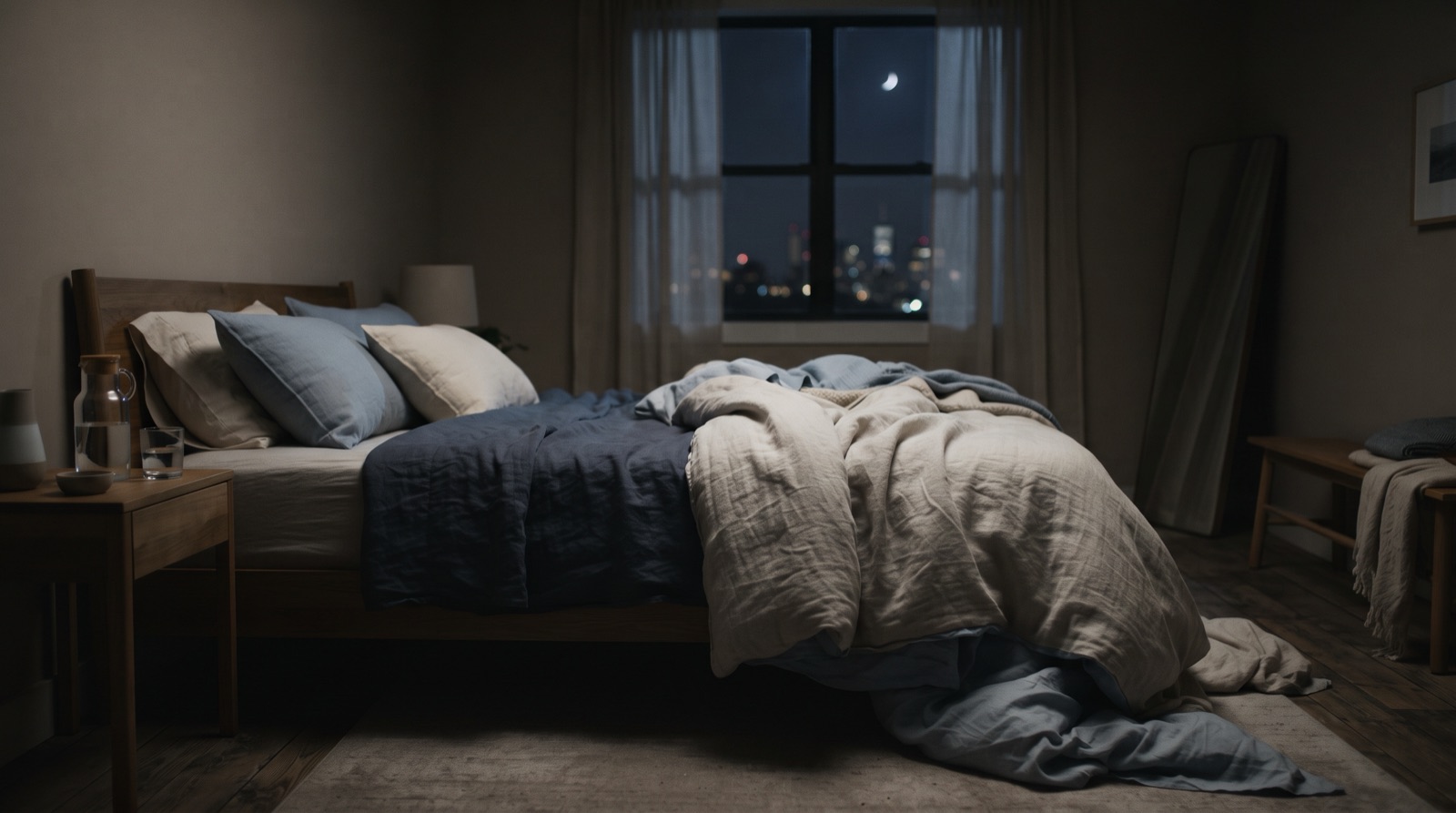
Hot room, or night sweats?
The NHS draws the line plainly: it's normal to sweat at night if your room or bedding is making you hot. Night sweats, in the clinical sense, means sweating so much that your nightclothes and sheets are soaking wet even though where you're sleeping is cool.
That distinction is the whole post, really. A warm sleeper in a stuffy July bedroom has an environment problem — solvable with airflow, a lighter duvet and better fabric. Someone soaking through sheets in a cool room has a symptom, and symptoms have different fixes than shopping baskets.
What causes true night sweats?
The NHS lists the common culprits: menopause and its hot flushes, anxiety, some medicines — including certain antidepressants, steroids and painkillers — alcohol or drug use, low blood sugar, and a harmless excessive-sweating condition called hyperhidrosis. Sometimes no cause is ever found.
US guidance from MedlinePlus adds more context to the same picture: infections and fevers, thyroid problems, caffeine, spicy food, and withdrawal from alcohol or sedatives all drive sweating too.
Notice what's not on either list: bedding. Sheets can make a warm sleeper comfortable; nothing woven treats any cause above.
When should you see a GP?
Per the NHS: if night sweats come regularly, wake you up, or worry you — and especially alongside a very high temperature, cough, diarrhoea, or losing weight for no reason. MedlinePlus adds chest pain, a rapid pounding heartbeat and shortness of breath to the see-someone list.
If that's you, book the appointment before you buy anything. If it's not — if your problem really is a hot bedroom and heavy bedding — our sleep-temperature guide walks the fixes in order of cost, starting free.